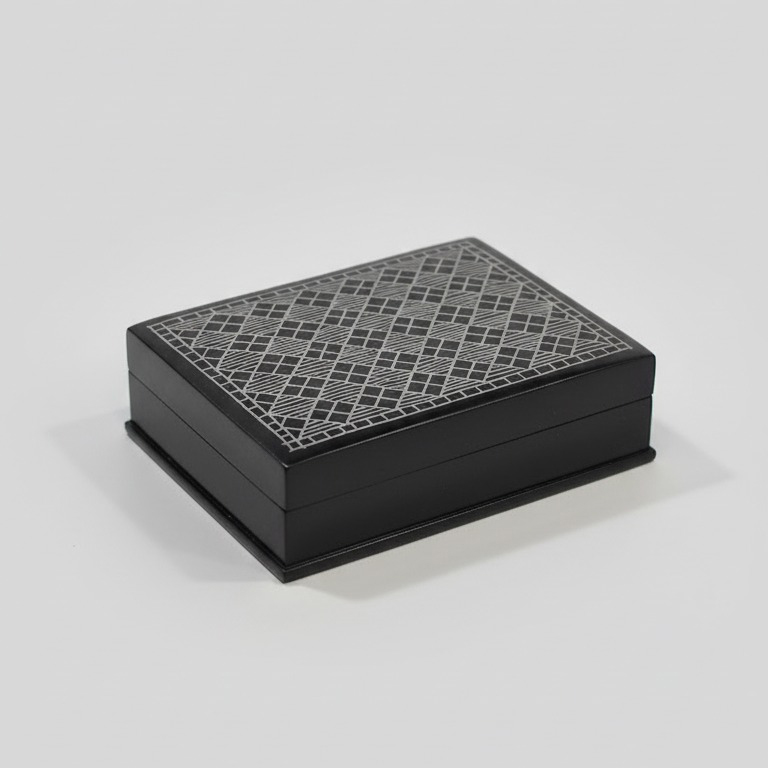
Tarkashi Metal Wire Inlay Box

Handcrafted By
Nikunj BihariA Marvel of Precision: The Art of Tarkashi
Experience the understated elegance and incredible precision of Tarkashi, a rare and revered form of metal inlay art. This exquisite wooden box is a masterpiece of the craft, showcasing a stunningly intricate geometric pattern created by painstakingly inlaying fine brass wires into a solid hardwood base. Often described as “drawing with metal,” Tarkashi is a testament to the artisan’s unwavering focus and incredibly steady hand. The cool, metallic sheen of the brass wire creates a striking and sophisticated contrast against the deep, rich tones of the polished wood, resulting in a piece that is both visually captivating and wonderfully tactile. This is more than a simple storage box; it is a piece of functional geometry, a small-scale architectural wonder that embodies a centuries-old tradition of masterful craftsmanship. It is the perfect sophisticated accessory for a desk or dresser, designed to hold small treasures in a vessel that is a treasure in itself.
Tarkashi: A Fading Legacy of Wire Inlay
The art of Tarkashi, derived from the Persian words ‘Tar’ (wire) and ‘Kashi’ (inlay), is a highly specialized craft with a rich history in India. Believed to have been introduced during the Mughal era, the craft found a dedicated home in the town of Mainpuri, Uttar Pradesh, which became the most famous center for this art form. Tarkashi was traditionally used to adorn luxury items, including furniture, doors, and the iconic wooden sandals known as ‘khadaon’. The craft demands immense skill and is practiced by only a handful of artisan families today, making each authentic Tarkashi piece a rare and valuable example of a fading legacy. The art relies on the perfect marriage of two materials: a hard, durable wood that can withstand the engraving process, and a soft, malleable metal wire that can be hammered into the fine grooves.
The Wood of Choice: Sheesham (Indian Rosewood)
The foundation of this exquisite box is Sheesham wood, also known as Indian Rosewood. This tropical hardwood is the preferred medium for Tarkashi artisans for several important reasons. Firstly, it is incredibly dense and strong, allowing the artisan to carve fine, crisp channels without the risk of splintering or chipping. Secondly, its natural dark tones, ranging from deep brown to reddish hues, provide the perfect contrasting background that makes the brass inlay pop. Finally, Sheesham has a beautiful, interlocking grain and polishes to a high, lustrous sheen, adding to the overall richness and quality of the finished piece. The wood is carefully seasoned before being used to ensure that it will not warp or crack over time, preserving the integrity of the intricate inlay work.
A Process of Extreme Skill and Patience
The creation of a Tarkashi box is a slow, methodical process that cannot be rushed and relies entirely on the artisan’s manual skill.
1. **Design and Preparation:** A precise geometric design is first drawn and then carefully transferred onto the smooth surface of the prepared wooden box.
2. **Engraving (Khudai):** Using a small hammer and a fine, sharp chisel, the artisan meticulously carves shallow grooves into the wood, following the pattern with exacting precision. The depth and width of every single groove must be perfectly uniform.
3. **Inlaying the Wire (Tar Bithai):** This is the heart of the Tarkashi craft. The artisan takes a fine brass wire and, using a hammer, carefully taps it into the carved grooves. For straight lines, the wire is laid down and hammered in. For the complex intersecting patterns seen here, each tiny segment of wire is cut and fitted with jewel-like precision.
4. **Flattening and Sanding:** Once the entire design is inlaid, the surface is carefully leveled and then sanded with progressively finer materials. This crucial step makes the wire perfectly flush with the wood and removes any scratches or hammer marks.
5. **Polishing:** The final step is to polish the box. This is often done with a natural wax or lacquer, which enhances the deep color of the Sheesham wood and makes the brass inlay gleam, completing the transformation from raw materials to a work of art.
Sophisticated Functionality and Timeless Design
With its clean lines and elegant, geometric pattern, this Tarkashi box has a timeless appeal that feels both ancient and strikingly modern, reminiscent of Art Deco design. It is a wonderfully versatile object. On a gentleman’s dresser, it serves as a sophisticated valet box for cufflinks, rings, and watches. On an office desk, it can hold business cards or fine stationery with an air of distinction. As a decorative piece on a bookshelf or console table, it adds a touch of intellectual and artistic curiosity. Its compact size and understated elegance make it a perfect accessory for organizing small but important items in a refined and beautiful way.
Nikunj Bihari
Nikunj Bihari, an agro artist from India, is putting in a lot of effort to strengthen the village economy by creating natural handicrafts out of coconut shells. As an artist, he creates lots of useful items and ethnic jewelry using raw materials like coconut shells, bamboo, and jute, which are available naturally on mother earth. He believes that the best thing about working with coconut shells is that he does not disturb nature.The beauty of Nikunj Bihari's work lies in his ability to carve the coconut shell into beautiful tea pots, bowls, ornaments, and home decor items. These handicraft items are not only beautiful but also eco-friendly, as they are made from natural materials. However, the coconut shell items are a bit expensive at times, which is why they are not popular in India as compared to other countries.Nikunj Bihari's Contribution to Eco-Friendly ArtNikunj Bihari is a skilled artisan who is committed to creating natural handicrafts that are both beautiful and eco-friendly. He believes in using materials that are available in nature, and his work is a testament to his dedication to this cause.As an agro artist, Nikunj Bihari is also working to strengthen the village economy by creating jobs and supporting local artisans. His work is helping to promote eco-friendly art and crafts in India and around the world.Recognition for Nikunj BihariNikunj Bihari's work has been recognized both nationally and internationally. He has received the National Award for making a master creation handicraft product made of coconut shell. His work has also been exhibited in galleries and museums around the world.Encouraging the Use of Eco-Friendly HandicraftsNikunj Bihari's work is a reminder of the importance of using eco-friendly materials in our daily lives. By using natural materials like coconut shells, bamboo, and jute, we can reduce our impact on the environment and promote sustainable living.As consumers, we can play a role in promoting eco-friendly handicrafts by supporting local artisans who create these products. By purchasing these products, we can help to create jobs and support sustainable livelihoods in our communities.
View Artisan's Workshop & Collection arrow_forward100% Handcrafted
Made with time-honored traditional techniques by certified Indian master artisans.
Authentic Materials
Genuine natural materials sourced responsibly from indigenous Indian craft clusters.
Fair Trade Impact
Every purchase directly supports the livelihoods of traditional artisan families.
| Craft / Category | Decoratives |
|---|---|
| Master Artisan | Nikunj Bihari |
| Material | Sheesham Wood (Rosewood), Brass Wire |
| Color | Black and Silver/Gold |
| Dimensions (L x W x H) | 15 cm x 10 cm x 5 cm cm |
| Weight | 450 g g |
| Brand / Cluster | Mainpuri Craftsmen |
| SKU / Item Code | HC-DEC-102 |
| Country of Origin | India |
No reviews yet. Be the first to share your thoughts!
Write a Review
Please log in to write a review.
Log InYou May Also Like
View All